No, black tourmaline (scientifically known as schorl) is fundamentally different from quartz. While both minerals might appear similar in dark colors, tourmaline has a complex boron-containing chemical composition and forms through different geological processes than pure silicon dioxide quartz.
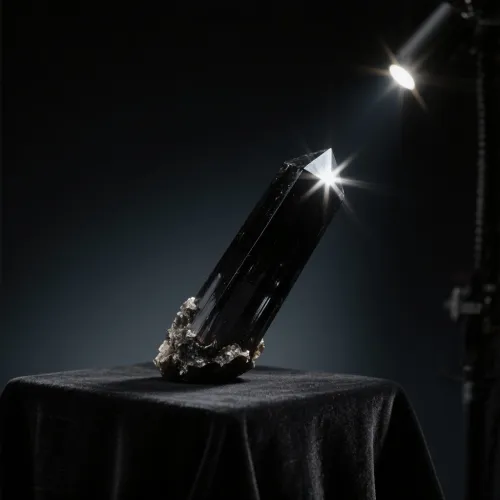
You're browsing crystals online or examining a dark gemstone bracelet when the question pops up: Is this deep-black stone tourmaline or quartz? The confusion happens constantly in stores and online listings – both can appear as opaque black pieces with similar price tags. Yet mistaking one for the other could lead to poor purchases since these minerals behave differently in jewelry settings and hold distinct values. This guide covers six practical angles collectors ask about, from basic mineral differences to spotting techniques when comparing raw specimens. We address exactly how these stones diverge at the molecular level through observable daily handling traits that matter for actual collection or wearing scenarios.
What exactly separates tourmaline and quartz family minerals?
How do their chemical formulas impact real-world properties?
Can non-experts visually tell black tourmaline from quartz?
Why do their formation environments create different crystals?
What practical factors influence their market values?
How did historical naming contribute to classification errors?
Tourmaline and quartz belong to entirely separate mineral families despite surface similarities. Tourmaline is a boron silicate compound with complex chemical variations, while quartz is pure silicon dioxide with no boron whatsoever.
These structural differences appear in everyday handling. With quartz belonging to the trigonal crystal system and tourmaline forming hexagonal patterns, their atomic arrangements resist direct association. Next time you examine crystal endings, notice quartz typically has pointed tips while tourmaline shows curved or rounded terminations under magnification – a daily-use identification cue easily verifiable with any jewelry loupe.
The chemical gap between these minerals explains their physical variations in jewelry pieces. Quartz maintains a straightforward SiO₂ formula, but tourmaline incorporates aluminum, iron, magnesium and crucial boron – elements absent in quartz.
Understanding their molecular differences helps explain why tourmaline tends to feel denser than quartz of the same size. While both rate similarly on the Mohs scale (about 7), quartz has consistent density around 2.65 g/cm³ whereas tourmaline averages 3.06 g/cm³. Try this practical test: Hold similar-sized dark samples palm-to-palm. Tourmaline usually carries that satisfying heft quartz lacks. Significant variations might even emerge based on geographical sources, making weight comparison a smart first check when shopping.
Several observable traits help distinguish these stones before purchasing. Tourmaline often has vertically aligned striations and distinct color-concentration differences.
Black tourmaline or quartz? Conduct immediate visual and tactile checks. Start by rotating stone surfaces under bright light – a phone flashlight works well. Tourmalines might reflect curved rainbow patterns while quartz throws straighter schiller flashes. Also pay attention to how they feel minutes after handling. Tourmaline commonly remains noticeably cooler to touch compared to quartz because of differing pyroelectric properties affecting thermal conductivity. These real-world differences become essential when comparing raw crystals or estate jewelry without certification papers.
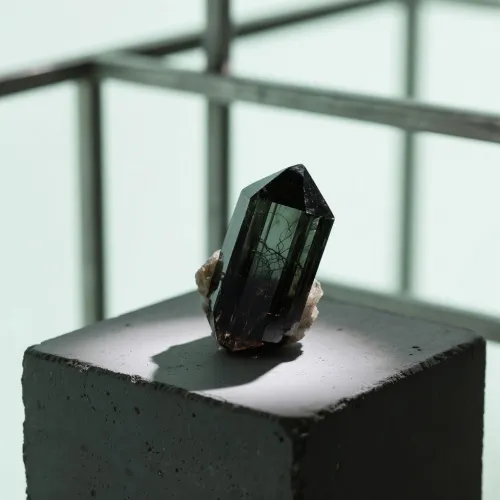
These minerals form through contrasting natural processes. Quartz typically develops in volcanic conditions while tourmaline grows mainly within granitic formations.
Tourmaline crystals predominantly form in granite pegmatites over millennia under high-temperature and pressure environments quartz doesn't experience. The distinctive curved crystal terminations specific to tourmaline develop from this formation setting – look for those signature curves during pre-purchase inspections. Knowing geographical origins matters too: Brazil and Nigeria produce distinctive tourmalines whereas smoky quartz typically haunts locations with specific volcanic histories. Always ask sellers specific formation location details when price points seem confusing.
Why does tourmaline often cost more despite similar aesthetics? Rarity factors from its complex boron content and formation conditions typically elevate tourmaline pricing over quartz equivalents.
Beyond scarcity, tourmaline's greater tendency toward large-crystal formations fuels collector premiums absent for quartz. When evaluating stones, check for size-to-weight proportionality – unusually heavy specimens might justify tourmaline pricing. Also remember that both minerals might wear differently: Quartz holds polish exceptionally but may chip more cleanly than tourmaline, affecting long-term jewelry valuation. Verify stone setting security before purchases since vibration damage can manifest differently given tourmaline's internal structure.
The confusion traces back to mislabeled specimens and terminology overlaps despite clear scientific demarcations.
You've probably encountered "black tourmaline quartz" descriptions online – a historically persistent naming error. While some retailers continue using this hybrid term, scientific classifications long separated schorl (tourmaline's true name) from any quartz association. Another mix-up involves "tourmalinated quartz" which describes actual crystals containing needle-like inclusions, differing from pure schorl. Protect yourself from mislabeling by seeking sellers who document exact geological origins and avoid ambiguous hybrid names when verifying purchases.
Focus on weight contrast between similar pieces and vertical surface lines as your primary buying filters when uncertain.
If you remember just one thing from this guide, let it be this: Always handle dark gemstones personally before committing. Feel that subtle density difference confirming either mineral group, then confirm by examining vertical surface lines under magnification. For transparency-focused jewelry settings, quartz stones may outlast tourmaline in high-impact placements despite similar hardness ratings. Choose based on your primary purpose – decorative appearance favors either option while geological collectors find distinct value in verified tourmalines. Either way, clarifying that fundamental classification prevents frustrating misidentifications later.
Q: Why do people confuse schorl tourmaline with smoky quartz?
A: Surface resemblance and historical labeling errors contribute. Both can form opaque black specimens that seem similar at first inspection before closer analysis.
Q: How to tell black obsidian from tourmaline versus quartz?
A: Obsidian has a glassier fracture pattern at broken edges and lacks crystalline structure. Obsidian also feels lighter than tourmaline and shows different surfaces.
Q: Does 'tourmalinated quartz' imply they're related?
A: Not fundamentally – this term describes quartz containing needle-like inclusions captured during formation. The minerals remain scientifically separate.
Q: Why might tourmaline cost more than quartz visually?
A: Supply limitations plus mineralogical factors like complex boron sourcing typically cause price differences. Higher density and collector demand further contribute.
Q: Does true pure black quartz naturally exist?
A: Typically no – "black quartz" refers to dark smoky quartz varieties which appear deep grey rather than absolute black without impurities.


$
