Black tourmaline forms as magmatic fluids cool between 300°C-650°C in igneous rocks like granite, primarily through pegmatite and hydrothermal processes. Its distinctive black coloration comes from high iron concentrations during crystallization, while its unique elongated prism shape develops under specific pressure conditions. The mineral crystallizes in environments rich in both boron and silica - geological constraints that limit where significant deposits occur naturally.
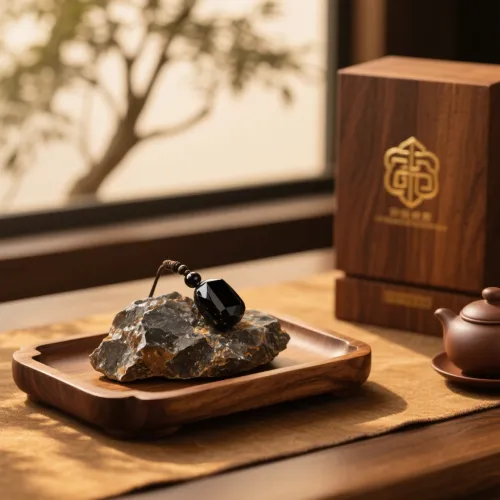
If you've ever run your fingers over the textured surface of a black tourmaline wand or examined jewelry-grade pieces under magnification, you've probably found yourself wondering about the journey these stones took from molten beginnings to your hand. Perhaps you've compared different specimens and noticed inconsistencies in color depth or surface patterns, sparking questions about how earth processes create these variations. Geology enthusiasts often want more than textbook definitions - they seek to interpret crystal quality through formation context when evaluating specimens or jewelry. Alongside the core formation process, this guide addresses those pragmatic concerns: from why some stones develop deeper striations and what mineral companions suggest about their origins, to how to identify growth interruptions that affect value.
1. What geological processes create black tourmaline crystals?
2. How do temperature and pressure influence crystal structure?
3. Why does tourmaline form distinct elongated prism shapes?
4. What physical signals indicate natural formation versus enhancements?
5. How does formation affect black tourmaline's conductivity properties?
6. What determines color variations in natural specimens?
Black tourmaline primarily develops during late-stage magma cooling when boron-rich hydrothermal fluids penetrate fractures. These fluids create crystals through replacement reactions within pegmatite veins under specific geological pressure windows. Formation requires simultaneous silica saturation and iron availability to form schorl's signature dark prismatic crystals.
This mineral emerges within granite-hosted environments through two primary pathways: direct crystallization from super-heated solutions and metasomatic replacement. If you've seen a tourmaline specimen attached to quartz or feldspar matrix, that indicates pegmatite formation where mineral-rich solutions cooled exceptionally slowly. High iron content in these solutions chemically reacts during cooling stages, giving schorl its opaque darkness. Crystal structure varies considerably depending on formation pressures - specimens from deeper geological zones may display clearer terminations due to protected development conditions.
Crystal quality directly relates to thermal stability during formation, with optimal structures developing between 400°C-550°C. Underground pressure creates tourmaline's distinctive vertical striations, while thermal gradients allow molecular alignment into three-sided prisms.
When examining specimens, you might notice some stones have deeper ridges than others. This structural feature starts developing during mineralization as crystalline cells build outward from a central axis under intense geological pressures. The rate of cooling significantly impacts crystal integrity: slower processes allow more ordered molecular arrangements that typically yield sharper geometric forms. You can observe this through termination clarity - well-defined pyramidal ends often suggest consistent environmental conditions, while fractured or dulled points might indicate subterranean stress events during growth.
Understanding how formation conditions affect visual characteristics helps collectors verify natural origins:

The trigonal crystal system governs tourmaline's distinctive elongated form. Atoms bond with unequal strength directionally, enabling faster vertical growth compared to horizontal expansion. Structural alignment creates piezoelectric properties - pressure applied along the length axis generates electrical charge.
You'll notice this directional preference dramatically in raw specimens - crystals often appear as parallel lines emerging from host rock like geological compass needles. This directional growth occurs because mineral molecules attach more readily along the crystal's C-axis during formation. What's fascinating is how this architecture enables functionality; piezoelectricity develops because molecular stacking creates positive and negative poles within the lattice, literally channeling pressure into electrical potential. This signature property makes raw specimens particularly valuable for geological study - you might test conductivity yourself by observing how different crystal sections react to pressure.
Authentic formation patterns include growth striations and micro-inclusions, distinct from man-altered indicators like surface iridescence. Natural specimens typically show matrix fusion lines and minor imperfections indicative of geological origin.
When evaluating formation authenticity, start by examining luster under directional lighting. Uniform vitreous shine may suggest straightforward crystallization, whereas abrupt shifts to resinous appearance might signal regrowth after geological interruptions. Growth zone inclusions deserve particular attention - trapped bubbles or mineral guests typically elongate parallel to crystal faces in natural formation, while synthetic alternatives often feature spherical patterns. You'll also want to inspect the stone-rock interface; tourmaline formed in-situ exhibits interpenetrating mineral boundaries with what it's growing on, whereas man-set stones have obvious separation points.
Regional geological differences create unique characteristics: Brazilian tourmaline tends toward darker opacity, Malagasy specimens often show bluish undertones, Appalachian stones typically feature quartz matrix inclusions. These variations result from differing trace minerals in parent rocks.
Why does geography matter to collectors? Because formation conditions like tectonic plate proximity or geothermal history leave telltale mineral signatures. For instance, you might observe higher iron concentrations (and thus deeper blacks) in specimens near magmatic hotspots versus those from sedimentary contact zones. Formation depth differences also manifest physically; deeper-origin stones typically have fewer inclusions as they weren't subjected to rapid environmental shifts. When examining locality labeling, consider how volcanic versus continental margins affected crystal development - an approach that helps detect mismatched provenance claims.
Keep these core recognition principles in mind: First, prioritize specimens showing uninterrupted vertical striations over polished pieces when seeking geological authenticity - consistent grooves indicate stable formation conditions. Second, judge transparency nuances; while all natural black tourmaline appears opaque at first glance, examine thin edges against bright light to spot depth variations suggesting iron distribution patterns. Finally, test piezoelectric response where possible - stronger conductivity typically correlates with superior crystalline integrity that formed undisturbed over geological time.
Q: How does black tourmaline form differently from green or pink varieties?
A: Color variations stem from elemental differences during crystallization - manganese creates pink/red hues while black derives from iron concentration. Formation temperatures and geological environments remain similar across varieties.
Q: Where does the black color in schorl actually come from chemically?
A: The deep opacity results from iron cations (Fe²⁺) replacing elements in the mineral structure during magma cooling stages. Higher iron concentrations may produce richer blacks, though impurities can cause undertones.
Q: Why does tourmaline from some locations have more inclusions than others?
A: Inclusion density often relates to formation stability - regions with seismic activity or geothermal fluctuation may produce specimens with trapped fluids and mineral fragments embedded during crystallization.


$
