Black tourmaline (schorl) primarily appears in granite-rich pegmatite formations worldwide, with high concentrations in Brazil, Madagascar, US states like Maine and California, and African Rift zones, often accompanied by quartz or feldspar. You'll typically encounter it through purposeful prospecting in specific geological formations rather than casual discovery.

Whether you're examining a newly purchased specimen or planning a rockhounding trip, the question of natural origin often leads to deeper curiosities. When encountering black tourmaline crystal clusters in shops or online listings, collectors frequently wonder: How do professionals authenticate its natural formation? What geological signs point to promising hunting grounds? And what ethical considerations apply when sourcing minerals? We'll address these practical concerns along with identification techniques that help distinguish genuine schorl from similar stones.
1. Where do black tourmaline deposits form geographically?
2. How to recognize host rock formations and geological indicators
3. Reliable methods to identify raw tourmaline in the field
4. Differentiating natural vs manipulated specimens
5. Ethical collecting protocols and legality basics
6. Secondary locations like alluvial deposits
Schorl develops through hydrothermal processes in silica-rich igneous formations, specifically within granite pegmatites where mineral-rich fluids cool slowly. This creates vertical prismatic crystals commonly found embedded alongside quartz, feldspar, and mica sheets within the rock matrix.
Look for coarse-grained pegmatite zones within granite batholiths where fractures allow mineral solutions to penetrate. These formations tend to appear as massive granite outcrops with distinct veins containing visible crystal structures. Secondary deposits form when erosion transports crystals into sedimentary layers - you may find waterworn nuggets in riverbeds downhill from source formations. While larger specimens can exceed two meters, most field discoverable pieces range between finger-length sizes to hand-sized clusters. Primary locations typically yield better preserved crystal structures while alluvial deposits often feature rounded forms.
Authentic schorl displays signature hexagonal prisms with vertical striations and irregular terminations, contrasting with smooth manufactured points. The mineral's distinctive structural properties help confirm field identifications quickly.
Conduct these inspections either at the collection site or when authenticating potential finds:
When uncertain about a specimen, apply these layered observational tests:
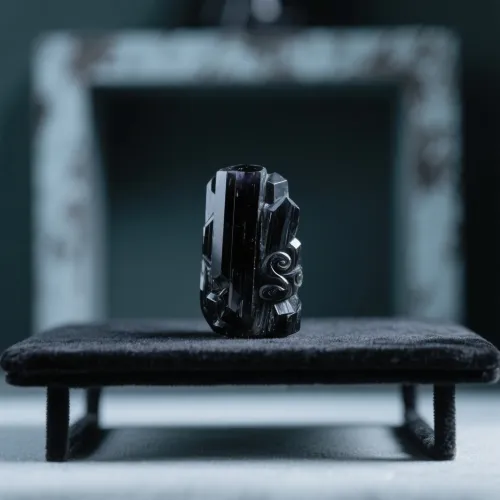
Well-documented tourmaline zones include Brazilian Minas Gerais pegmatites, Madagascar's Antananarivo province, US sites like South Dakota's Black Hills, and rift valley formations in Nigeria and Mozambique. Regional geology directly influences crystal characteristics and discovery methods.
Brazilian specimens often form in graphic granite with striking quartz associations, typically appearing as dense black columns emerging from milky host rock. Californian deposits like Himalaya Mine generate smaller but well-terminated crystals in complex zoned pegmatites requiring careful vein identification. African alluvial deposits near river systems feature water-smoothed nuggets mixed with garnet sands. When prospecting mountainous areas, specifically search granite cliffs with visible quartz veins - weathered slopes below such formations regularly reveal loosened crystals.
Unprocessed tourmaline typically shows irregularities like matrix remnants, uneven termination fractures, subtle color zoning, and natural weathering signs - whereas commercial specimens frequently display artificial perfection like uniform coloring, manufactured points, or polished surfaces.
Three practical verification techniques help assess specimens:
First apply the temperature test: genuine stones remain cooler than surrounding rocks longer due to heat dissipation properties. Next examine color depth under bright light; thin edges may reveal brownish undertones indicating natural iron content. Finally, test pyroelectric response by rubbing surfaces vigorously with wool fabric - natural crystals develop detectable static charges attracting paper fibers. While artificial modifications don't necessarily negate geological origin, they complicate natural weathering evidence and crystalline authenticity analyses.
Legal collection permissions and mineral ownership rights vary significantly across jurisdictions, requiring research into local regulations before prospecting on public or private lands. Sustainable practices help preserve geological resources.
Consult regional geological survey maps to identify designated rockhounding sites rather than taking from protected areas. When visiting private claims, documentation like notarized permission letters proves essential. During extraction, focus on loose specimens from scree slopes rather than damaging in-situ formations. Document discovery locations since tourmaline near lithium or tin deposits may have scientific significance. Prioritize educational collection over commercial harvesting unless holding proper mining permits. Trade shows and established mineral dealers often provide ethically sourced alternatives if field collection isn't feasible.
When preparing for tourmaline hunting, remember three field-tested principles: First, prioritize pegmatite veins within granite-rich terrains with documented schorl occurrences. Second, always carry a 10x magnifier to verify hexagonal striations – the most reliable visual cue against similar dark minerals. Finally, cross-verify finds using dual confirmation: weight-density feel and the static charge test. Following these priorities helps manage expectations while maximizing legitimate discovery potential.
Q: Does volcanic rock contain tourmaline?
A: While possible through geological transfer, primary formation requires granite rather than volcanic environments.
Q: Can beaches yield black tourmaline specimens?
A: Only near granitic coastal formations where erosion transports minerals shoreward.
Q: How does schorl differ from black obsidian in hand samples?
A: Obsidian exhibits conchoidal fracturing and glasslike transparency on thin edges; tourmaline shows crystalline structures.
Q: Are all tourmaline striations perfectly parallel?
A: Natural vertical lines on crystals may appear slightly irregular versus machined ones.
Q: Does garnet presence indicate nearby tourmaline?
A: Both minerals form in similar geological conditions, making this association likely.


$
